
News
What’s happening?
With over 100 children and young people on roll aged 3 -19 we're always up to something fun. Whether its a budding group of digital natives producing our British Sign Language Newsround, coding games, translating the national news, enjoying a themed lunch or just out and about exploring the city or countryside.
Learn more
10/11/2026
Why Messy Play Matters: Building Communication | RSDD
Our play group provides an accessible and inclusive early-years space for deaf children and their families. Deaf children have opportunities to learn, play, communicate and meet other deaf children and deaf adult role models, while parents can connect with other families, share experiences and access on site specialist professionals. CODA children and their deaf parents/carers are also welcome, creating opportunities for families of deaf children to meet deaf adults and for everyone to build connections within the wider Deaf community.
Why messy play works
We work closely with Derby City Council Children’s Services, using a PEEP-based approach. Sessions typically include a welcome and Sign & Sing, a PEEP discussion linked to the theme where parents can share experiences and challenges, followed by free play within our EYFS environment. We also have weekly input from the SaLT and Audiology teams when available, alongside monthly visits from Derby’s Health Visiting team, providing families with accessible information, advice and support for children aged 0-5.
Building vocabulary through experience
Play gives children real experiences to attach language to. Words become meaningful because children can see and feel them. For deaf children, linking a sign or word directly to a sensory experience helps build new vocabulary stick. Adults can share the same reference points as children, model language through play, naming actions, describing textures and building simple phrases.
Shared attention and turn-taking
Good communication depends on looking, turn-taking, sometimes waiting and always responding. The play group is ideal for practising these early skills. When an adult and child explore together, the child learns to shift attention between the activity and the person they are communicating with. This visual attention is especially important for deaf children, who need to look up to see signs, facial expressions and lip patterns. Simple games, such as taking turns to pour or stir, build the back and forth of conversation.
Developing fine motor skills
Squeezing dough, making marks in sand and gripping brushes all strengthen the small muscles in the hands and fingers. These skills support later writing and also help children form clear, confident handshapes as their signing develops.
Expressing feelings and building confidence
Play group offers a safe way for children to express likes, dislikes and feelings, and to try new things at their own pace. Being understood when they say “I don’t like it” or “more” builds confident communicators.
Trying messy play at home
You do not need special equipment. Cooked pasta, water with bubbles, flour and water or a tray of dry cereal all work well. Get down to your child’s level, make sure they can see your face and hands, follow their lead and keep your language simple and repetitive. Pause often to give them the chance to respond.
Play at the heart of learning
In our Early Years provision, free play-based learning is central to how children develop language, confidence and independence, all the things they need to be school ready.. Our bilingual approach, supported by specialist speech and language therapy and audiology, means every child’s language acquisition is nurtured in a way that suits each child’s individual learning style.
To find out more about our Early Years provision, get in touch with our admissions team or arrange a visit.
2/9/2026
Why British Sign Language Matters in Education | RSDD
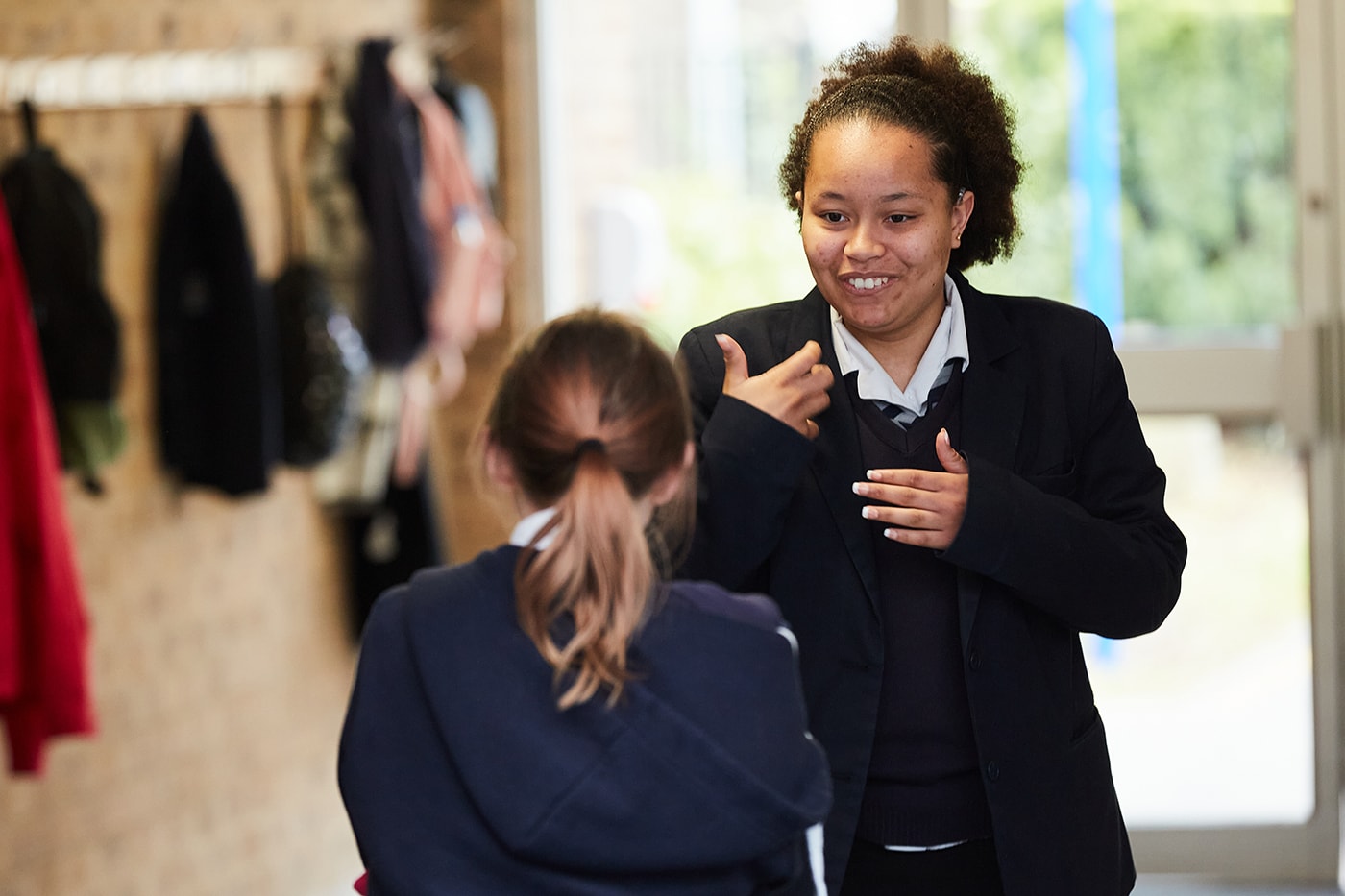
When people think about British Sign Language (BSL), they often think of it simply as a way for deaf people to communicate. For the deaf children and young people we teach, it is so much more. BSL is the foundation that learning, wellbeing and identity are built on.
Access to language from the start
Every child needs full access to language in their early years. For deaf children, spoken language alone does not always provide that access, even with hearing aids or cochlear implants. Without a language they can access fully, children can fall behind long before they start school. BSL is a complete, natural language with its own grammar and structure, and because it is visual, deaf children can take it in easily and completely. Giving children BSL early means they never have to wait to understand the world around them.
A stronger route to English
A common worry among families is that signing will hold back spoken or written English. Our experience, together with the progress of children, shows the opposite. A secure first language gives children the understanding of how language works, and that knowledge transfers. Our bilingual approach places equal emphasis on BSL and English (spoken and written), so pupils become confident in using both. Speech and language therapy, audiology and teaching work hand in hand, so each child’s language development is nutured in a way that matches individual need.
Learning without barriers
In a signing classroom, children and young people are not using all their energy trying to follow what is being said. They can ask questions, share ideas, challenge each other and show what they really know. We regularly see children who were once disengaged become eager, active learners once language is no longer a barrier. That change in confidence impacts on learning at every key stage in turn, leading to the very best chances in life.
Identity, belonging and role models
Language is closely tied to who we are. Learning in BSL and English alongside deaf peers and adults helps children develop a positive sense of self. Seeing deaf staff who teach and a range of visiting deaf professionals, children and young people know what they can achieve for their own futures. BSL also connects children to Deaf culture, history and a proud, supportive community they can choose to be a part of throughout their lives.
Preparing for life beyond school
Strong language skills help children and young people have their say, build relationships and make informed choices. Fluency in both BSL and English prepares our children and young people to thrive in further education, training and work.
More than just communication
Since the British Sign Language Act 2022, BSL has been formally recognised in law as a language of Great Britain. In the classroom, its value has been clear for much longer. From Early Years through to Post 16, BSL runs through every part of school life at RSDD, and we share our expertise with families and the wider community through our BSL outreach work.
Want to see our bilingual approach in action? Get in touch with our admissions team or arrange a visit.

31/7/2023
Coronation Lunch
14/6/2023
Deaf Awareness Tips
Deaf Awareness tips from our amazing Post 16 students

14/6/2023
Year 6 – Staffordshire Regiment Museum Visit
Year 6 Visited the Staffordshire Regiment Museum where they learnt about The Great War and what life was like in the trenches. They enjoyed trying on some of the uniforms and learning about the living conditions that the soldiers had to endure, a very interesting day with lots of interesting facts learnt


Get in touch
Come and visit us